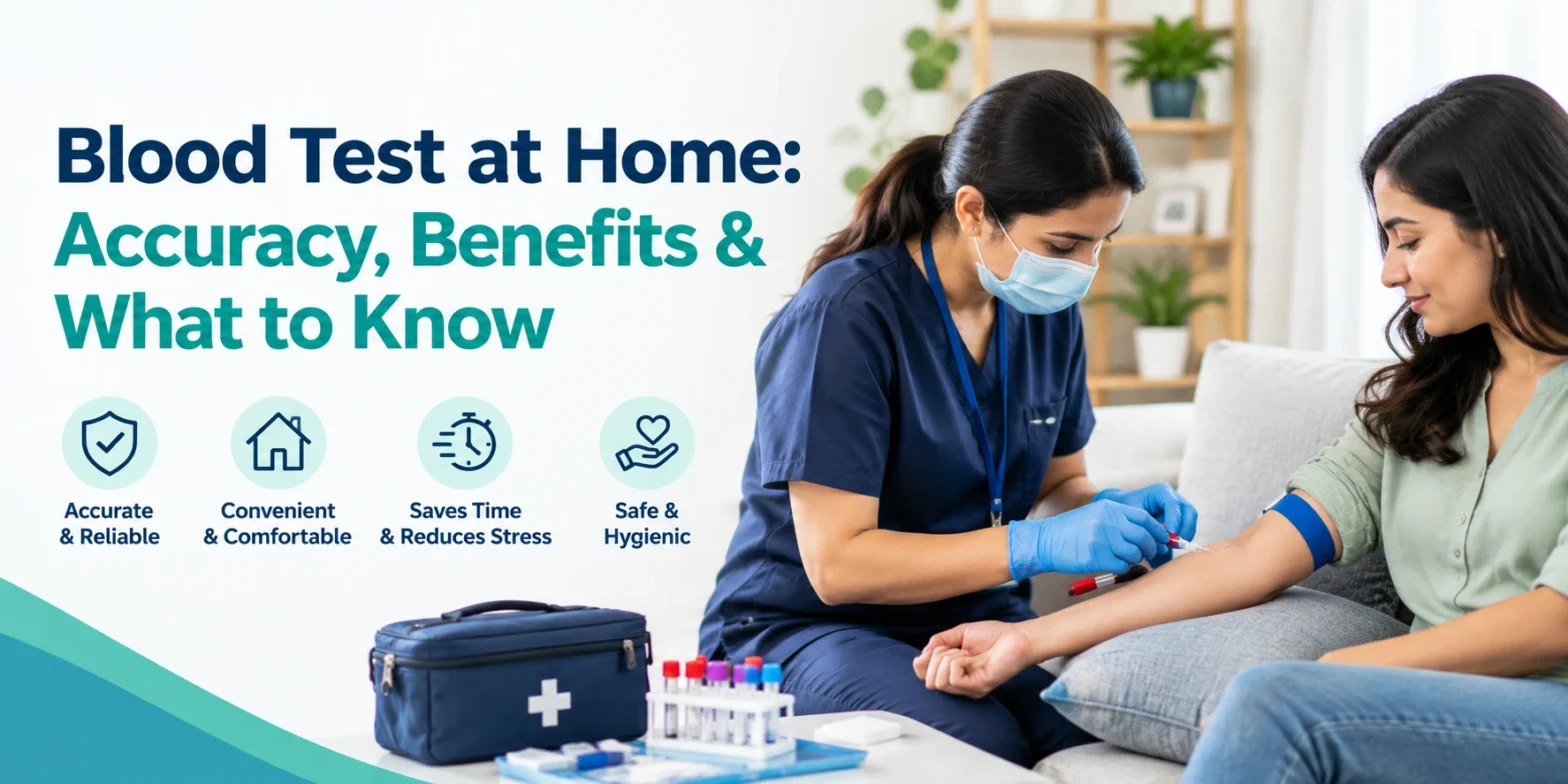
Blood Test at Home: Accuracy, Benefits & What to Know

Getting a blood test used to mean the same tired routine: take time off, drive to the lab, sit in a room full of other people also waiting for their turn, get poked, and then wait around some more just in case there’s a queue for the receipt. In 2026, a lot of people have simply stopped doing that. A trained phlebotomist comes to you, draws the sample in your own kitchen or living room, and the results show up on your phone. For many people, a Blood Test at Home has become a much easier alternative to the traditional lab visit. This isn’t a small trend, either. India’s diagnostics market is expected to cross ₹1.1 lakh crore in 2026, and home collection has gone from being a nice-to-have to something people just expect. As one industry report put it bluntly: labs that can’t offer home collection, even in smaller towns, are going to lose patients to the ones that can. But the question people actually want answered before they book is simple: is it as good as going in person? Let’s get into it honestly. What’s Actually Different (and What Isn’t) A home blood test means a certified phlebotomist  someone specifically trained to draw blood comes to your house, office, or wherever suits you, using the same sterile, professional-grade equipment they’d use in a lab. Your sample then goes to the same accredited lab it would have gone to anyway.   Traditional Lab Visit Blood Test at Home Where you get poked The lab itself Your home, office, wherever you choose Where it’s processed The lab The same accredited lab Wait time However long the queue is that day A set appointment window Accuracy Standard lab accuracy Identical, assuming proper collection Travel Required None Best fit for Anyone who can easily get there Elderly patients, anyone with mobility issues, busy people, contagious patients, families testing together The short version: nothing about the actual test changes. What changes is where the needle happens. What Tests You Can Actually Get Done This Way Most of the common ones, honestly: Complete Blood Count (CBC) Blood sugar — fasting, post-meal, or HbA1c Cholesterol and triglycerides Liver function Kidney function Thyroid panel Vitamin D and B12 Hormonal tests Some infectious disease screening, depending on local regulations Full-body health checkup packages A few tests that need very precise timing — like a glucose tolerance test that requires multiple draws over a couple of hours — need a bit more coordination. Worth asking your provider directly if your test falls into that category. Okay, But Is It Actually as Accurate? Yes — when it’s done properly, which it usually is. Here’s the thing people sometimes miss: accuracy comes down to the collection technique and how the sample’s handled afterward, not the address where the needle went in. A trained phlebotomist follows the exact same sterile procedure whether you’re in a clinic or on your own sofa. What actually determines accuracy, regardless of location: Following fasting rules properly — if the test needs 8-12 hours of fasting, that matters wherever the draw happens How the sample’s transported — reputable services use proper cold-chain handling to keep the sample stable Correct tubes and labeling — this is standard procedure, not something home services skip Whether the lab itself is accredited — check for NABL accreditation in India, or your country’s equivalent One thing worth being clear about: this is different from those self-administered finger-prick kits you might buy at a pharmacy. Those can genuinely have accuracy issues, since results depend heavily on how carefully the user follows instructions. A professional phlebotomist drawing your blood and sending it to an accredited lab doesn’t carry that same risk. Booking One: What Actually Happens Pick the test or package you need. Check if it requires fasting, and for how long. Book a slot — early mornings tend to fill up fast for fasting tests, for obvious reasons. Give your address and contact details. The phlebotomist shows up with sterile, pre-labeled kits. The actual draw takes maybe five to ten minutes. The sample gets transported properly to the lab. Your report lands digitally, usually within 6-24 hours depending on the test. If you want, you can book a follow-up call with a doctor to actually talk through what the results mean. What This Costs A single basic test — CBC, glucose, that kind of thing — is usually priced close to what you’d pay walking into a lab. Bundled health packages tend to work out cheaper per test than booking everything separately. Some providers add a small home-collection fee; others just build it into the package price. If you want a doctor to walk you through your results afterward, that’s often an optional add-on. A tip that actually saves money: if more than one person in the house needs testing, book everyone together. A lot of providers drop the per-person price for multi-member bookings. Who This Genuinely Makes Life Easier For Elderly patients who find getting to a lab physically exhausting Anyone with a disability that makes travel difficult Busy professionals who can’t spare the time during work hours Parents testing young kids, who are usually far less anxious getting tested at home than in a clinical setting People managing chronic conditions who need frequent monitoring — diabetes, thyroid, kidney issues Immunocompromised or contagious patients who genuinely shouldn’t be sitting in a public waiting room Families or offices doing a group health checkup together Picking the Right Package Package What’s included Good for Basic health check CBC, glucose, lipid profile General annual screening Diabetes panel Fasting/post-meal glucose, HbA1c Ongoing diabetes monitoring Thyroid panel TSH, T3, T4 Thyroid tracking Senior citizen package CBC, kidney and liver function, thyroid, vitamin D/B12, cardiac markers Preventive care for older adults Full body checkup 40-90+ parameters Comprehensive annual screening Women’s health package Hormonal panel, thyroid, iron, vitamins General reproductive and wellness screening What to Actually Check Before You Book Is the phlebotomist background-checked and wearing visible… Continue reading Blood Test at Home: Accuracy, Benefits & What to Know

Doctor on Home Visit: When Is It Better Than the ER? 
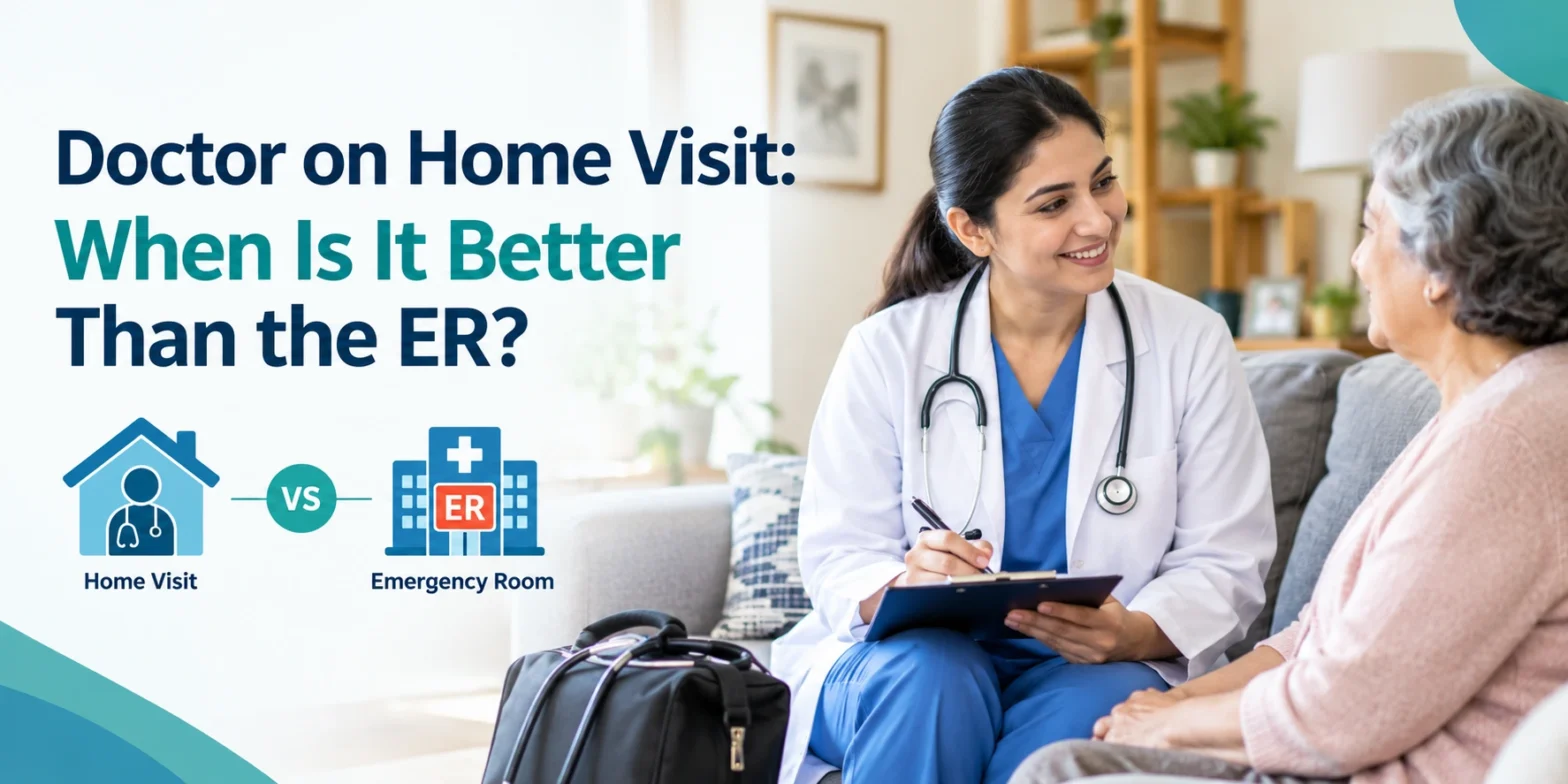
You know the moment. Your kid’s forehead is burning up, or your dad’s suddenly dizzy and unsteady, and you’re standing there at 2 a.m. trying to decide: is this an emergency room situation, or can it wait until morning? There’s actually a third option a lot of people don’t think of in the moment  calling a doctor on home visit who can come to you within a couple of hours and give you an actual answer instead of a guess. This has stopped being a niche service. As home healthcare has become more normal, more people are realizing this is often the calmer, more sensible choice for the huge middle ground of symptoms that are worrying but not life-threatening especially with kids and elderly parents, and especially outside normal clinic hours when your usual doctor isn’t reachable. Here’s how to actually think about it: when it makes sense, how the whole thing works, roughly what it costs, and maybe most importantly how to tell the difference between “call a home visit doctor” and “go to the hospital right now.” What This Service Actually Is A doctor-on-home-visit service sends a licensed physician to your home, usually same-day or within a few hours, to look at something that’s bothering you enough to need a professional but isn’t clearly an emergency. It’s a bit different from booking a regular physician home visit for an ongoing condition like diabetes management — this is more reactive. Something’s come up today, and you don’t want to wait in a clinic line to find out if it’s serious. People usually call for things like: A sudden high fever, in a kid or an adult Vomiting, diarrhea, or looking a bit dehydrated A suspected infection — throat, ear, urinary tract, a skin issue A cut, sprain, or minor injury A mild allergic reaction Getting sick right after travel Flu or something contagious, where you’d rather isolate than sit in a waiting room Just a general “something’s not right” feeling that doesn’t obviously scream ER The Question That Actually Matters: Home Visit or Hospital? This is the call that matters most, and it’s worth having a clear framework in your head before you’re panicking at midnight. Situation Home Visit Works Go to the ER Fever, no breathing trouble Fine Not usually necessary Vomiting/diarrhea, mild dehydration Fine Only if it’s severe Minor cuts, sprains, bruises Fine Only for deep wounds or suspected fractures Chest pain or pressure, trouble breathing No Go now Facial drooping, slurred speech, sudden weakness No Call emergency services immediately Throat or face swelling from an allergic reaction No Go now Bleeding that won’t stop No Go now Loss of consciousness No Call emergency services If you’re genuinely unsure and the situation feels like it’s getting worse, don’t try to save time by calling a home-visit doctor — go to the hospital or call emergency services. That’s not being overly cautious; it’s just the right call. What Actually Happens When You Call You book through an app, a website, or a phone call, and describe the symptoms as clearly as you can. Most services now do a quick triage step first  sometimes AI-assisted, sometimes a nurse on the phone  mainly to catch anything that actually needs the ER instead of a home visit. You get matched with a nearby physician and a rough arrival window. The doctor examines you at home — vitals, physical exam, questions about history and symptoms. You get a diagnosis and a treatment plan on the spot, including medication if it’s appropriate and they have it with them. A digital prescription gets sent to your phone, often with delivery options for the medicine. If it needs more than they can handle at home, they’ll refer you onward — a specialist, a hospital, or maybe just a blood test to confirm something. If you want, the visit notes get shared with your regular doctor, so nothing falls through the cracks. How Fast Can Someone Actually Get There? Honestly, it depends on a few things: Time of day — daytime calls move faster than 2 a.m. ones, unsurprisingly Where you are — dense cities tend to have better coverage than smaller towns or rural areas How busy things are — flu season or a local outbreak can stretch response times What tier of service you book — some platforms let you pay a bit more for priority dispatch Most decent urban services aim for somewhere between one and three hours for a standard call. That’s not instant, but it beats an ER waiting room most nights. Before the Doctor Shows Up, Have This Ready A rundown of symptoms and when they started Current medications and any allergies Relevant medical history — surgeries, chronic conditions, recent hospital visits A thermometer reading, if you’ve got one Somewhere reasonably quiet and well-lit for the exam Insurance details, if that’s relevant to you Any recent test results connected to the issue What It’ll Cost You The pricing usually breaks down into a few pieces: A base fee for the consultation itself A late-night or early-morning surcharge, if that’s when you’re calling Sometimes a travel charge, depending on distance and city Extra for any on-site testing — ECG, glucose check, oxygen levels Medication, usually billed separately unless it’s bundled in Good services will show you the price upfront before the doctor even leaves for your place. If a provider won’t give you a straight number before booking, that’s worth noticing. Why This Has Become So Common, So Fast A few things are pushing this trend at once. Traffic and city congestion make even a “quick” clinic trip eat up half a day when you’re sick. Healthcare costs are pushing people to be more deliberate about when they actually need an ER versus a targeted, cheaper alternative. Post-pandemic habits made remote and at-home care feel normal in a way it didn’t before. And frankly, the logistics of matching a doctor to a patient nearby, tracking arrival times  are just easier… Continue reading Doctor on Home Visit: When Is It Better Than the ER? 
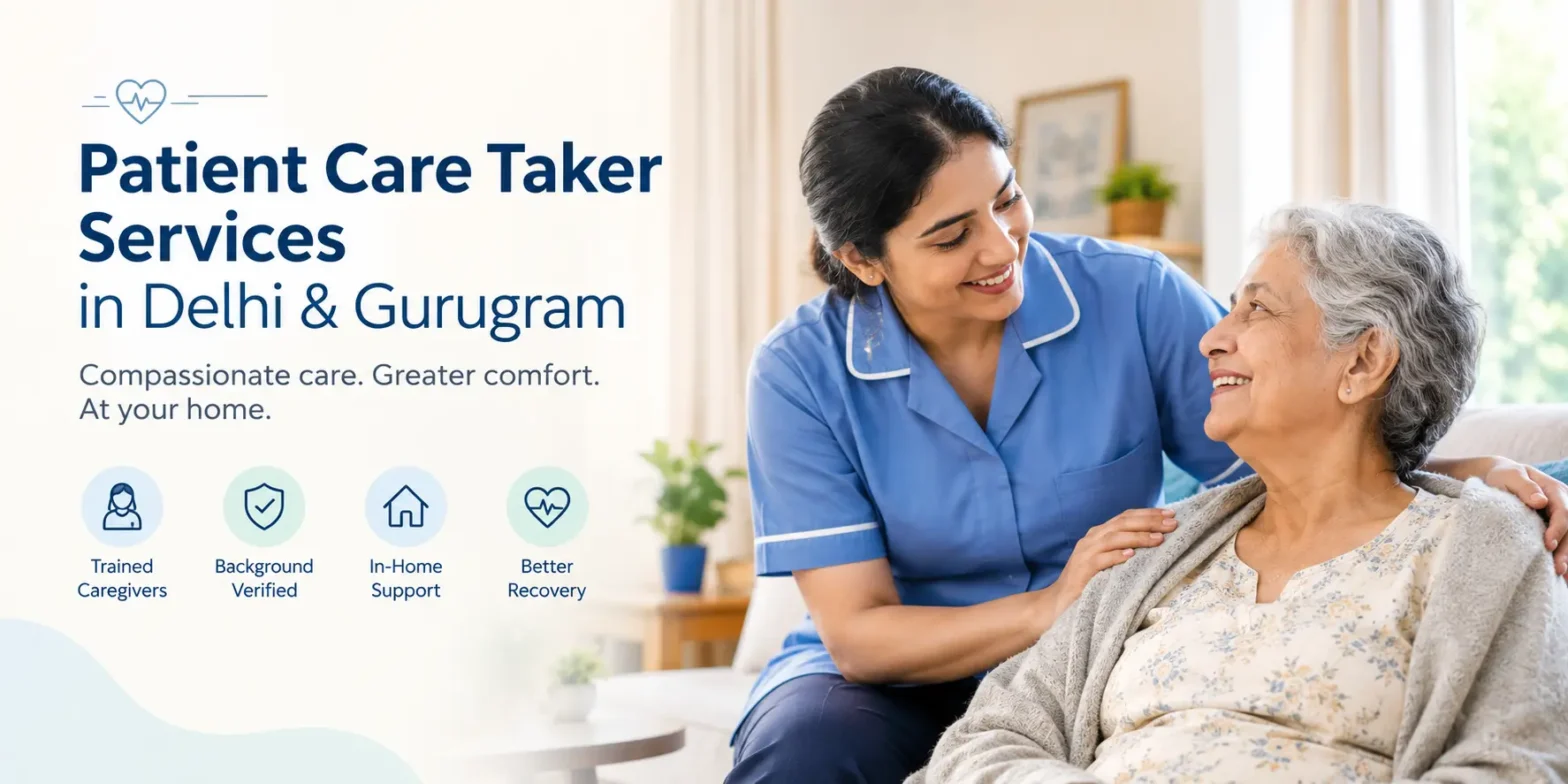
Patient Care Taker Services in Delhi & Gurugram

Why Finding the Right Patient Care Taker Matters More Than Ever When a parent is recovering from surgery, a grandparent is living with dementia, or a family member is bedridden after an accident, the question every household in Delhi and Gurugram eventually asks is the same: who is going to look after them at home? A trained patient care taker does far more than “keep an eye” on someone. They manage medication schedules, monitor vitals, prevent falls, assist with mobility, and act as the crucial link between the family and the treating doctor. With Delhi NCR’s population aging rapidly and more families adopting nuclear household structures, professional home-based patient care has moved from a luxury to a necessity. This guide walks you through everything a Delhi or Gurugram family needs to know in 2026 — costs, care types, how to vet an agency, the latest technology shaping home care, and how to book a patient care taker who is qualified, background-verified, and genuinely suited to your loved one’s needs.   What Is a Patient Care Taker, Exactly? A patient care taker (also called a caregiver, attendant, or home health aide) is a trained individual who provides non-hospital, in-home support to patients who are elderly, recovering from surgery, chronically ill, or living with limited mobility. Depending on the level of medical complexity, a patient care taker can range from: Basic attendant — daily living support, companionship, mobility assistance Trained nursing attendant — vitals monitoring, wound care, injections ICU-level/critical care attendant — ventilator support, complex medical monitoring Understanding which category your family needs is the first step toward getting the right kind of help — and avoiding paying for a service level you don’t actually require.   Why Demand for Patient Caretakers Is Rising in Delhi & Gurugram (2026 Trends) Several converging trends are driving the sharp rise in home-based patient care across the NCR region: An Aging, Urbanizing Population Delhi NCR has one of India’s fastest-growing elderly populations, and Gurugram’s rapid corporate migration means many working professionals live away from aging parents — creating direct demand for professional in-home support. Shorter Hospital Stays, Longer Home Recovery Hospitals increasingly discharge post-surgical and post-ICU patients earlier to free up beds, shifting the recovery burden — wound care, mobility training, vitals tracking — onto the home environment. Technology-Enabled Care Coordination 2026 has seen wider adoption of: App-based instant booking for caregivers and nurses Remote patient monitoring wearables (SpO2, ECG, fall-detection) Digital care plans shared in real time with family members and doctors AI-assisted symptom triage before a caregiver or doctor is dispatched Insurance & Government Support Expanding Slowly Schemes like Ayushman Bharat (PM-JAY) now extend coverage to senior citizens aged 70+, and more private insurers are beginning to offer OPD/domiciliary care riders — indirectly making structured home care more financially accessible.   Types of Patient Care Taker Services Available in Delhi & Gurugram   Care Type Best Suited For Typical Skill Level Approx. Monthly Cost (₹) Basic Attendant / Companion Care Elderly needing daily support, mobility help General training 12,000 – 28,000 Trained Nursing Attendant Wound care, injections, chronic disease monitoring Certified nursing skills 25,000 – 45,000 ICU / Critical Care Attendant Ventilator support, post-ICU discharge Specialized clinical training 48,000 – 1,20,000+ Dementia / Alzheimer’s Care Memory loss, wandering risk, behavioral support Specialized dementia training Varies by hours Respite Care (Short-Term) Temporary relief for family caregivers General/nursing Daily/weekly rate Post-Operative Care Surgery recovery, wound dressing Trained nurse preferred Package-based Note: Prices vary by locality within Delhi NCR and Gurugram, hours required (part-time vs. live-in), and whether medical equipment or lab coordination is bundled in. If your family needs a doctor to physically assess the patient alongside caregiver support — for example, to set the initial care plan or review recovery progress — you can explore doctor home visit services that work alongside your caretaker for coordinated care.   How Much Does a Patient Care Taker Cost in Delhi & Gurugram? Based on current 2026 market rates across NCR: Basic attendant/caregiver (full-time): ₹12,000–₹28,000/month, or roughly ₹650–₹1,200/day Trained nursing support: ₹25,000–₹45,000/month 24/7 live-in nursing care (overall average): ₹25,000–₹80,000/month depending on condition severity ICU-level critical care: ₹48,000–₹1,20,000+/month Cost-Saving Tip Booking care in monthly packages rather than daily rates is consistently more economical. Families needing care for multiple members (e.g., an elderly parent and a recovering spouse) also benefit from family care packages, which often bundle a set number of visits or hours at a discounted rate.   How to Choose a Reliable Patient Care Taker Agency: A Step-by-Step Checklist Step 1: Define the Level of Care Needed Is it companionship, nursing-level medical support, or critical/ICU-level care? Be specific about mobility status, existing conditions, and medication needs. Step 2: Shortlist 2–3 Registered Agencies Avoid hiring an unverified independent caretaker without agency backing — this removes accountability and safety checks. Step 3: Verify Background Checks & Training Ask directly about police verification, training certificates, and prior clinical experience — especially for nursing-level or dementia care roles. Step 4: Ask About Replacement Policy A dependable agency should be able to provide a backup caretaker if your assigned one is unavailable or unsuitable — continuity of care should never depend on a single individual. Step 5: Request a Trial Period Before committing to a long-term contract, ask for a short initial booking to evaluate compatibility and quality of care. Step 6: Confirm Pricing Transparency Get a written breakdown of charges — many families report discrepancies between “starting from” advertised rates and final billing, so clarify this upfront. Step 7: Finalize the Agreement Lock in terms on pricing, notice period, working hours, and included services (equipment, lab coordination, doctor visits) before the caretaker begins. You can start this process directly by exploring available home care services or going straight to schedule a home visit for an initial assessment.   Specialized Care Scenarios Dementia & Alzheimer’s Care Dementia care requires more than general caregiving experience. Look for agencies offering: Specific dementia/Alzheimer’s training Structured routines and home safety-proofing Experience managing wandering risk and… Continue reading Patient Care Taker Services in Delhi & Gurugram

Patient Care Taker: Benefits, Services, and When You Need One

Caring for a loved one during illness, recovery, or aging can be physically demanding and emotionally overwhelming.  Managing medications, daily routines, mobility support, and ongoing care while balancing work and personal responsibilities often becomes a major challenge for families. Have you been wondering whether your loved one needs professional caregiving support? Are frequent hospital visits, recovery needs, or daily care responsibilities becoming difficult to manage? These are common concerns for families caring for elderly parents, post-surgery patients, or individuals with chronic health conditions. This is where a professional patient care taker can make a meaningful difference. Whether your loved one is recovering after surgery, requires daily assistance, or needs long-term elderly care, professional caregiving can improve comfort, safety, and overall quality of life.  The right support not only helps patients recover better but also gives families much-needed peace of mind. AmeriHealth Home Healthcare provides compassionate and reliable home healthcare solutions tailored to each patient’s unique needs, ensuring trusted care in the comfort of home. In this guide, we’ll explore the role of a patient support assistant, the benefits of professional caregiving, available services, and key signs that indicate when expert support may be needed. Key Takeaways • A patient assistant provides daily support, mobility assistance, and health-related care• Professional caregiving improves patient comfort, safety, and recovery outcomes• Ideal for elderly patients, post-surgical recovery, and chronic illness management• Early care support can reduce hospital readmissions and health complications• Choosing the right care provider improves both patient well-being and family confidence   Common Pain Points Families Face Families caring for loved ones often face several challenges. Challenge Common Risk Managing medications Missed doses or incorrect timing Mobility assistance Falls and injuries Post-surgical recovery Delayed healing Long-term elderly care Caregiver burnout Without professional support, these challenges can impact both patient health and family well-being.   What Is a Patient Care Taker? A patient support assistant is a trained professional who assists patients with daily activities, mobility, personal care, and basic health support. Responsibilities often include: • Personal hygiene assistance• Feeding support• Mobility assistance• Medication reminders• Daily routine support• Emotional companionship• Health monitoringA qualified care taker ensures patients receive safe, attentive, and compassionate care in the comfort of home. Do You Need Professional Care Support? Is the patient recovering after surgery?↓Yes↓Professional care support recommendedANDDoes the patient need help with daily activities?↓Yes↓Consider professional care taker at home support Signs Your Loved One May Need a Patient Care Taker Consider professional care support if your loved one: •Needs daily assistance with routine activities•Has mobility challenges•Requires regular health monitoring•Is recovering after surgery•Has chronic health conditions•Is elderly and living alone If multiple signs apply, hiring a care taker can significantly improve care quality. Benefits of Hiring a Care Taker A professional patient care taker provides important advantages for both patients and families. Better Recovery Support Timely care improves recovery and reduces complications. Improved Safety Professional support lowers risks of falls, missed medication, and health emergencies. Emotional Well-being Patients feel safer and more supported in familiar surroundings. Reduced Family Stress Families gain peace of mind knowing their loved one is receiving proper care. Services Offered by AmeriHealth Home Healthcare AmeriHealth Home Healthcare offers comprehensive home healthcare services designed for diverse patient needs. Core Services Specialized Services Nursing Care Services Behavioural Therapy Doctor Visits Speech and Swallow Support Physiotherapy At Home Palliative Care at Home Senior Care Maternity & Child Care Geriatric Care Long-Term Acute Care Additional services include: • ABG Tests At Home• Lab Tests• Investigations @ Home• Medicine Delivery At Home• Medical Equipment On Rent• Vaccination @ Home• 24/7 Ambulance Service• Nutrition and Fitness at Home Checklist: Before Hiring a Care Provider Use this checklist before selecting professional support. • Are caregivers trained and verified?• Is care personalized to patient needs?• Does the provider offer emergency support?• Are services transparent and reliable?• Does the provider have strong patient reviews? Choosing the right provider directly impacts patient recovery and safety. Real Patient Experience A family in Faridabad was caring for a 74-year-old stroke recovery patient who required mobility support, medication management, and daily assistance. Frequent hospital visits and constant monitoring became increasingly difficult for the family. After hiring a professional care taker, daily routines became structured and safer. The caregiver helped with mobility assistance, medication reminders, and routine care. Within a few weeks: • Patient mobility improved• Recovery became smoother• Family stress reduced significantly• Overall quality of care improved Professional care taker at home support played a major role in improving both recovery and family peace of mind. Client Experience “The caregiver was compassionate, attentive, and highly professional. Our family felt relieved knowing our father was receiving proper care and support every day.” Family Member of Senior Care Patient Conclusion Choosing the right patient care taker can make a significant difference in a patient’s recovery, comfort, and overall quality of life. The right support ensures patients receive compassionate care while families gain confidence and peace of mind. AmeriHealth Home Healthcare remains committed to delivering trusted home healthcare solutions designed around every patient’s unique needs. Need Professional Patient Care Support? Quality home care can make recovery safer, smoother, and more comfortable. Whether your loved one needs elderly care, post-surgical recovery support, or long-term caregiving, expert help is available. Contact AmeriHealth Home Healthcare to schedule a home visit. FAQs 1. Who should hire a patient care taker? A patient care assistant is ideal for elderly patients, post-surgical patients, individuals with chronic illnesses, and those needing daily assistance at home. 2. What does a patient care assistant do? A patient care taker helps with daily routines, mobility support, personal care, medication reminders, and emotional support. 3. Is a patient care taker different from a nurse? Yes. A patient care taker focuses on daily support and caregiving, while nurses provide clinical and medical care such as injections, wound care, and medical monitoring. 4. When should I hire a care taker at home? You should consider professional support when daily care becomes difficult, recovery needs monitoring, or elderly loved ones require continuous assistance. 5.… Continue reading Patient Care Taker: Benefits, Services, and When You Need One

Home Nursing Care Services: Complete Guide to Safe, Professional Care at Home

Caring for a loved one with medical needs can be challenging. Frequent hospital visits, long waiting times, and the stress of managing recovery at home often leave families overwhelmed.  Whether it’s elderly care, post-surgical recovery, chronic illness management, or long-term medical support, families need reliable healthcare solutions that prioritize both safety and comfort. This is where professional home nursing care services become essential. Instead of repeated hospital visits, patients can receive quality medical care at home from trained healthcare professionals.  This ensures better recovery, greater comfort, and peace of mind for both patients and families. AmeriHealth Home Healthcare understands that every patient has unique healthcare needs.  Our professional nursing team delivers personalized medical care at home, helping families access trusted healthcare in the environment where patients feel safest.  Key Takeaways • Home nursing care services provide hospital-quality medical care at home• Ideal for elderly care, post-surgical recovery, chronic illness, and long-term support• Home-based care improves comfort, recovery, and emotional well-being• Early nursing intervention can prevent complications and hospital readmissions• Choosing an experienced provider improves patient outcomes Common Pain Points Families Face Many families struggle with similar healthcare challenges. Problem 1: Frequent Hospital Visits Are Exhausting Traveling repeatedly for routine care becomes physically and emotionally draining. Solution Professional home nursing care services reduce unnecessary hospital visits by bringing care home. Problem 2: Managing Recovery Without Medical Support Post-surgical recovery often requires wound care, medication, and monitoring. Solution Home nurses provide structured recovery support and continuous medical supervision. Problem 3: Elderly Family Members Need Constant Care Older adults often need regular monitoring and medication support. Solution Home nursing ensures senior citizens receive safe and compassionate medical care. Problem 4: Fear of Complications Families worry about infections, bedsores, medication errors, or worsening conditions. Solution Professional nursing care reduces risks through expert monitoring and timely intervention. What Are Home Nursing Care Services? Home nursing care services refer to professional medical care delivered at home by qualified nurses and trained healthcare professionals. Services commonly include: • Medication administration• Vital monitoring• Injection support• IV therapy• Wound dressing• Pain management• Catheter care• Chronic disease management• Post-operative careProfessional home nursing care services help patients recover safely while maintaining comfort and dignity. Who Can Benefit from Home Nursing Care Services? Elderly Patients Senior citizens needing regular health monitoring and support. Post-Surgical Patients Patients recovering after surgery requiring observation and medical care. Chronic Illness Patients Patients managing diabetes, stroke recovery, Parkinson’s, respiratory illness, and more. Bedridden Patients Patients requiring long-term support and prevention of complications. Palliative Care Patients Patients needing comfort-focused care and symptom management. Decision Tree: Do You Need Home Nursing Care? Use this simple guide. Does the patient need regular medical monitoring? Yes → Consider home nursing care services Is frequent hospital travel difficult? Yes → Home care can reduce stress and improve convenience Does the patient require medication management or wound care? Yes → Professional nursing support is recommended Is the patient elderly, bedridden, or recovering after surgery? Yes → Home nursing can significantly improve care quality If you answered “Yes” to two or more, professional nursing care may be the right solution Real Experience: How Home Nursing Made Recovery Easier One family in Delhi faced challenges caring for a 76-year-old stroke recovery patient. Frequent hospital visits were exhausting, and the family struggled with medication schedules, mobility support, and daily monitoring. After starting professional home nursing care services, the patient received structured daily care including physiotherapy support, medication monitoring, and regular health assessments. Within weeks: • Recovery became more structured• Stress for family members reduced• The patient felt more comfortable at home• Overall health outcomes improved Experiences like these show how professional home healthcare can make a meaningful difference. AmeriHealth Home Healthcare has seen how personalized care at home improves both patient recovery and family confidence.  Benefits of Home Nursing Care Faster Recovery Patients often heal better in familiar surroundings. Personalized Care Every care plan is tailored to patient needs. Reduced Infection Risk Home care lowers exposure to hospital-acquired infections. Better Emotional Well-being Patients feel more secure and supported at home. Peace of Mind Families gain confidence knowing professionals are providing care. Why Choosing the Right Provider Is Important Lorem ipsum dolor sit amet, consectetur adipiscing elit. Ut elit tellus, luctus nec ullamcorper mattis, pulvinar dapibus leo. Choosing the right provider for home nursing care services directly affects patient safety and outcomes. Look for: • Qualified nursing professionals• Verified healthcare staff• Personalized care plans• Emergency support availability• Transparent communication• Strong reputation and reviews Conclusion Healthcare is evolving, and families increasingly prefer care solutions that combine professional medical expertise with the comfort of home. This is why home nursing care services are becoming a vital healthcare solution. The right care at the right time improves recovery, reduces complications, and enhances quality of life. At AmeriHealth Home Healthcare, our mission is to deliver safe, compassionate, and professional healthcare support tailored to every patient’s needs.  We are committed to helping families access trusted care where it matters most at home. Need Trusted Nursing Care at Home? Get expert medical care delivered to your doorstep. Whether your loved one needs elderly care, post-surgical support, or long-term nursing assistance, professional care can make all the difference. Connect with AmeriHealth Home Healthcare today to explore personalized home healthcare solutions for your family. FAQS 1. Who should consider home nursing care services? Home nursing services are ideal for elderly patients, post-surgery patients, bedridden individuals, people recovering from major illnesses, and those managing chronic health conditions. These services are especially helpful for patients who need regular medical supervision, medication support, or professional care at home. 2. Are home nursing services safe? Yes, home nursing care services are safe and highly effective when provided by trained and qualified healthcare professionals. Professional nurses follow proper medical protocols, monitor patient health closely, and provide personalized care in a safe home environment, helping reduce unnecessary hospital visits and infection risks. 3. What services are included in home nursing care? Professional home nursing services may include medication administration, injections,… Continue reading Home Nursing Care Services: Complete Guide to Safe, Professional Care at Home

Home Visit Doctors Near Me: 7 Signs You Should Book a Doctor at Home

What if your elderly parent suddenly develops weakness at night?What if your loved one is recovering from surgery and cannot travel?What if a simple hospital visit becomes stressful, exhausting, and risky? These are situations many families face daily. Long waiting times, traffic, mobility challenges, and infection risks make hospital visits difficult, especially for elderly patients, children, post-surgery patients, and people with chronic illnesses. That is why more families are searching for home visit doctors near me to access expert medical care in the comfort of home.  At AmeriHealth Home Healthcare, patients receive personalized medical support designed to improve comfort, convenience, and recovery. Choosing home visit doctors near me can help families receive timely medical care without unnecessary stress. Key Takeaways • Home doctor visits reduce travel stress• Faster medical care for urgent situations• Ideal for elderly and recovery patients• Lower exposure to infections• Better comfort and convenience   Why Searches for Home Doctor Visits Are Rising in India The demand for home healthcare is increasing in Delhi NCR, Faridabad, and South Delhi. Why? • Growing elderly population• Rising chronic illness cases• Busy family schedules• Increased preference for home recovery• Lower infection risk This is why searches for home visit doctors near me continue to grow. Common Problems Families Face During Medical Emergencies Medical emergencies are stressful. Families often struggle with: • Late-night health concerns• Sudden weakness• Fever• Mobility issues• Difficulty traveling• Long waiting times Delays can make health conditions worse. This is why timely care matters. 7 Signs You Should Book a Doctor at Home 1. Your Loved One Has Limited Mobility Traveling can be difficult for elderly patients or those recovering from surgery or injury. In such cases, searching for home visit doctors near me becomes the most practical option. 2. Frequent Hospital Visits Are Becoming Exhausting Repeated visits can lead to: • Physical exhaustion• Mental stress• Caregiver burnout Home consultation helps reduce this burden. 3. Your Elderly Parent Needs Regular Monitoring Senior citizens often need regular medical supervision for: • Blood pressure• Diabetes• Heart conditions• General health monitoring Home consultations improve convenience and safety. 4. Recovery After Surgery Requires Monitoring Post-surgery patients often need medical evaluation for: • Pain• Healing progress• Medication response• Complications Early monitoring improves recovery outcomes. 5. Chronic Illness Requires Ongoing Care Patients with long-term health conditions benefit from regular medical supervision. Examples include: • Diabetes• Hypertension• Respiratory conditions• Cardiac problems This is why many families search for home visit doctors near me for ongoing support. 6. Hospital Visits Increase Infection Risk For elderly or immunocompromised patients, hospital visits can increase health risks. Home consultation offers safer care. 7. Symptoms Need Immediate Medical Attention Symptoms like: • Sudden weakness• Fever• Breathing difficulty• Dizziness• Severe fatigue should not be ignored. Timely doctor consultation can prevent complications. Pain Point vs Solution Patient Problem Best Solution Difficulty traveling Doctor home visit Elderly care needs At-home consultation Recovery monitoring Home doctor support Infection risk Home-based medical care Chronic illness management Regular doctor visits Professional home visit doctors near me services solve these challenges effectively Hospital Visit vs Doctor Home Visit Comparison Hospital Visit Doctor Home Visit Travel required No travel Long waiting time Faster consultation Infection exposure Lower risk Stressful for patients Comfortable Less personalized More personalized This is why many families now prefer home visit doctors near me services. Healthcare Services Available at Home AmeriHealth provides complete home healthcare solutions for patients and families. Services include: • ABG Tests At Home• Behavioural Therapy• Geriatric Care• Happiness Sessions• Lab Test• Maternity & Child Care• Medical Equipment On Rent• Nutrition and Fitness at Home• Palliative Care at Home• Speech And Swallow Support• Vaccination @ Home• Investigations @ Home• Medicine Delivery At Home• Senior Care• 24/7 Ambulance Service• Doctor Visits• Physiotherapy At Home• Long-Term Acute Care• Nursing Care Services   How AmeriHealth Supports Families with Home Doctor Visits AmeriHealth Home Healthcare provides expert doctor consultations at home with patient-focused medical care. Services are designed to deliver: • Expert diagnosis• Treatment planning• Monitoring• Recovery support The goal is simple: safe and reliable care at home. Real Experience: Why Families Delay Medical Care Many families wait too long before seeking medical help. Common reasons: • “Maybe symptoms will improve.”• “Let’s wait until morning.”• “Traveling right now is difficult.” Unfortunately, delays can worsen conditions. Early care often prevents bigger complications. Client Story: Timely Care Prevented Emergency Hospitalization A 73-year-old patient in Faridabad developed sudden weakness and dizziness at night. The family was worried. Traveling to a hospital felt difficult because the patient had severe mobility issues. Instead of waiting, they booked a doctor consultation at home. The doctor quickly identified dehydration and blood pressure imbalance. Immediate treatment prevented further complications and avoided emergency hospitalization. Timely intervention made all the difference. Need a Doctor at Home Urgently? Do not wait for symptoms to worsen. Get expert medical care at home for elderly care, chronic illness management, post-surgery recovery, and urgent health concerns. • Experienced Doctors• Personalized Care• Fast Home Visits Questions to Ask Before Booking a Doctor Visit Ask these important questions: • Is the doctor experienced?• Is support available quickly?• Are additional healthcare services available?• Is care personalized? These questions help families choose trusted home visit doctors near me providers. Conclusion Choosing home visit doctors near me is about convenience, safety, and timely healthcare access. With trusted medical professionals, compassionate support, and personalized home healthcare solutions, AmeriHealth Home Healthcare helps families access quality care without hospital stress. Book a Doctor Visit Today Need trusted medical consultation at home? Connect with AmeriHealth Home Healthcare today. FAQs 1. Who should book a doctor at home? Doctor-at-home services are ideal for elderly patients, children, post-surgery patients, individuals with mobility challenges, and anyone who finds traveling to a clinic difficult. They are also helpful for patients who prefer personalized care in the comfort of their home.  2. Are doctor home visits safe? Yes, doctor home visits are a safe and convenient healthcare option when provided by qualified medical professionals. They reduce unnecessary travel, minimize exposure to infections… Continue reading Home Visit Doctors Near Me: 7 Signs You Should Book a Doctor at Home

Nursing Services: How to Choose the Right Care for Your Loved Ones

Is your loved one recovering after surgery? Struggling with mobility? Managing a chronic illness? Or requiring constant medical attention at home? For many families, caregiving starts with love, but over time, it can become physically exhausting and emotionally overwhelming.  Managing medications, monitoring symptoms, assisting with mobility, and handling emergencies can create immense pressure. The biggest concern is always the same: “Are we providing the best care possible?” Professional nursing services help families ensure their loved ones receive expert medical support, compassionate care, and personalized attention in the comfort of home.  At AmeriHealth Home Healthcare, families receive trusted home-based care designed to improve recovery, comfort, and quality of life. Choosing the right nursing services can make all the difference in your loved one’s recovery journey. Key Takeaways • Professional care improves safety and recovery• Home care reduces stress and improves comfort• Expert nurses support medical and emotional needs• Proper care reduces hospital readmissions• Choosing the right provider improves long-term outcomes   Why Home Healthcare Is Growing Quickly in India Across Delhi NCR, Faridabad, and South Delhi, etc,. more families are choosing home healthcare. Why? • Growing elderly population• Rise in chronic illnesses• Increased post-surgery care needs• Better comfort at home• Reduced infection risks This growing demand has significantly increased the need for reliable nursing services. Common Challenges Families Face While Caring for Loved Ones Caring for a loved one at home is not easy. Families commonly struggle with: • Medication management• Mobility support• Wound care• Emergency situations• Sleep disruption• Caregiver burnout Many caregivers balance jobs, responsibilities, and emotional stress while trying to provide full-time care. Over time, this affects both patient health and family well-being. Pain Point vs Solution Family Pain Point Professional Solution Missed medication timings Timely medication administration Difficulty with mobility Assisted movement support Recovery complications Regular monitoring Frequent hospital visits Better home care management Caregiver stress Professional medical assistance Questions Every Family Should Ask Before Choosing Care Choosing care is a major decision. Ask these important questions: Is the caregiver professionally trained? Proper qualifications ensure safe and reliable care. Is emergency support available? Quick response matters during critical situations. Are care plans personalized? Every patient has different recovery needs. Is continuous monitoring provided? Regular monitoring helps prevent complications. Does the provider communicate with family members? Clear communication builds trust and confidence. These questions help families identify high-quality nursing services. How to Choose the Right Care Identify Patient Needs         ↓ Assess Medical Condition         ↓ Determine Required Support         ↓ Compare Care Providers         ↓ Evaluate Expertise & Availability         ↓ Start Personalized Care Plan Types of Nursing Care Based on Patient Needs Different conditions require different care plans. Care Type Comparison Patient Condition Recommended Care Post-Surgery Recovery Short-term nursing Elderly Care Long-term support Stroke Recovery Rehabilitation care Chronic Illness Daily monitoring Critical Care Advanced support   The best nursing services are always personalized according to the patient’s condition. Why Families in Delhi NCR Prefer Home Nursing Care Home care offers major advantages: • Familiar surroundings• Better emotional comfort• Lower stress• Personalized care• Greater family involvement• Reduced infection risk For elderly patients and critical recovery cases, home care often delivers better overall comfort. How AmeriHealth Supports Families with Compassionate Care Finding the right care provider matters. AmeriHealth Home Healthcare offers personalized care solutions tailored to individual patient needs. Services include: • Medication administration• Vital monitoring• Pain management• Wound care• Post-hospital recovery• Long-term support Each care plan focuses on comfort, safety, and better health outcomes. Decision Tree: Which Care Option Is Right? Ask yourself: Does the patient need daily medical supervision? Yes → Skilled nursing care recommended No → Periodic care may be enough Is mobility severely limited? Yes → Daily assistance required No → Limited support may work Does the patient have chronic illness? Yes → Continuous monitoring recommended No → Basic support may be enough This framework helps families choose suitable nursing services. Real Experience: When Families Try Managing Alone Many families start caregiving thinking they can manage everything independently. Initially, it feels possible. But gradually: • Medication schedules become overwhelming• Night-time monitoring causes sleep loss• Fear of emergencies increases anxiety• Caregiver fatigue becomes serious Professional support often becomes necessary before burnout affects everyone. Client Story: From Stress to Relief A 76-year-old stroke patient in Faridabad returned home after hospital discharge. Mobility was severely limited, and recovery required constant monitoring. His family tried managing care alone. Within days: • Sleep schedules were disrupted• Medication timing became stressful• Fall risk created daily anxiety• Emotional exhaustion increased The family felt overwhelmed. After starting structured professional care, everything changed. The patient received: • Daily monitoring• Timely medication• Mobility assistance• Recovery-focused support Within weeks, recovery improved and family stress reduced significantly. This is the difference expert care can make. Feeling Overwhelmed Managing Care Alone? You do not have to handle everything alone. Professional care ensures your loved one receives medical support while your family gains peace of mind. •Qualified Nurses•Personalized Care Plans•24/7 Support Signs Your Loved One Needs Professional Care You may need expert support if your loved one:• Misses medications• Has mobility issues• Requires wound care• Needs post-surgery monitoring• Has chronic health complications•Needs continuous supervision These signs often indicate a need for professional nursing services. Conclusion Choosing the right nursing services is one of the most important decisions families make. The right support improves recovery, enhances comfort, and reduces caregiver stress. With experienced professionals, compassionate care, and personalized recovery plans, AmeriHealth Home Healthcare helps families access dependable care when it matters most. Book Trusted Care Today Need reliable care for your loved one? Connect with AmeriHealth Home Healthcare today. FAQs 1. What are nursing services at home? Home care includes medical support such as medication administration, monitoring, wound care, and recovery assistance. 2. Who needs home nursing care? Elderly patients, post-surgery patients, stroke survivors, and people with chronic illnesses often benefit. 3. Is home nursing care better than hospital care? For non-emergency situations, home care offers comfort, personalized attention, and reduced infection risk. 4. How do I choose the right care provider? Evaluate qualifications,… Continue reading Nursing Services: How to Choose the Right Care for Your Loved Ones