Blood Test at Home: Accuracy, Benefits & What to Know

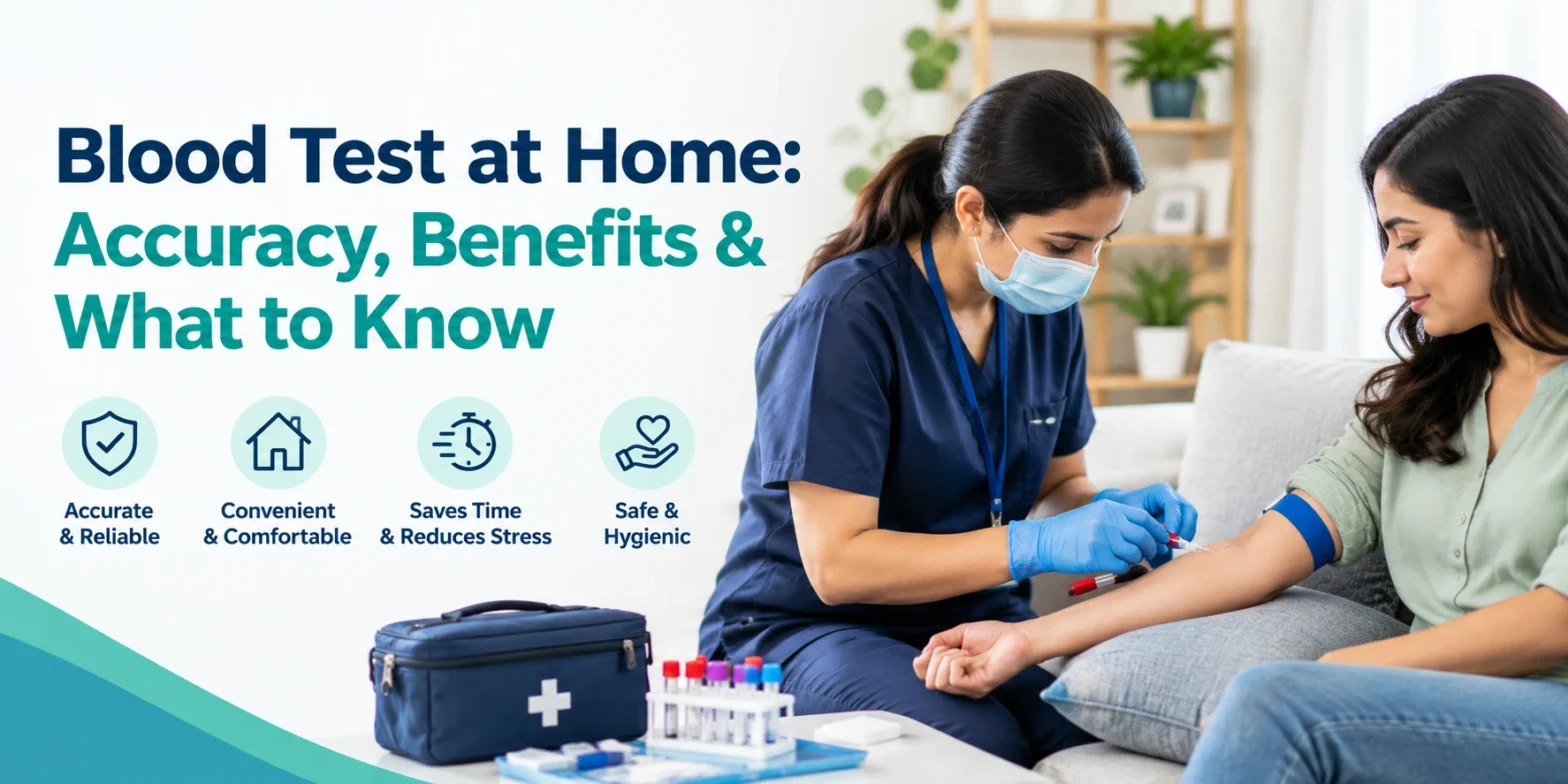
Getting a blood test used to mean the same tired routine: take time off, drive to the lab, sit in a room full of other people also waiting for their turn, get poked, and then wait around some more just in case there’s a queue for the receipt. In 2026, a lot of people have simply stopped doing that. A trained phlebotomist comes to you, draws the sample in your own kitchen or living room, and the results show up on your phone. For many people, a Blood Test at Home has become a much easier alternative to the traditional lab visit. This isn’t a small trend, either. India’s diagnostics market is expected to cross ₹1.1 lakh crore in 2026, and home collection has gone from being a nice-to-have to something people just expect. As one industry report put it bluntly: labs that can’t offer home collection, even in smaller towns, are going to lose patients to the ones that can. But the question people actually want answered before they book is simple: is it as good as going in person? Let’s get into it honestly. What’s Actually Different (and What Isn’t) A home blood test means a certified phlebotomist  someone specifically trained to draw blood comes to your house, office, or wherever suits you, using the same sterile, professional-grade equipment they’d use in a lab. Your sample then goes to the same accredited lab it would have gone to anyway.   Traditional Lab Visit Blood Test at Home Where you get poked The lab itself Your home, office, wherever you choose Where it’s processed The lab The same accredited lab Wait time However long the queue is that day A set appointment window Accuracy Standard lab accuracy Identical, assuming proper collection Travel Required None Best fit for Anyone who can easily get there Elderly patients, anyone with mobility issues, busy people, contagious patients, families testing together The short version: nothing about the actual test changes. What changes is where the needle happens. What Tests You Can Actually Get Done This Way Most of the common ones, honestly: Complete Blood Count (CBC) Blood sugar — fasting, post-meal, or HbA1c Cholesterol and triglycerides Liver function Kidney function Thyroid panel Vitamin D and B12 Hormonal tests Some infectious disease screening, depending on local regulations Full-body health checkup packages A few tests that need very precise timing — like a glucose tolerance test that requires multiple draws over a couple of hours — need a bit more coordination. Worth asking your provider directly if your test falls into that category. Okay, But Is It Actually as Accurate? Yes — when it’s done properly, which it usually is. Here’s the thing people sometimes miss: accuracy comes down to the collection technique and how the sample’s handled afterward, not the address where the needle went in. A trained phlebotomist follows the exact same sterile procedure whether you’re in a clinic or on your own sofa. What actually determines accuracy, regardless of location: Following fasting rules properly — if the test needs 8-12 hours of fasting, that matters wherever the draw happens How the sample’s transported — reputable services use proper cold-chain handling to keep the sample stable Correct tubes and labeling — this is standard procedure, not something home services skip Whether the lab itself is accredited — check for NABL accreditation in India, or your country’s equivalent One thing worth being clear about: this is different from those self-administered finger-prick kits you might buy at a pharmacy. Those can genuinely have accuracy issues, since results depend heavily on how carefully the user follows instructions. A professional phlebotomist drawing your blood and sending it to an accredited lab doesn’t carry that same risk. Booking One: What Actually Happens Pick the test or package you need. Check if it requires fasting, and for how long. Book a slot — early mornings tend to fill up fast for fasting tests, for obvious reasons. Give your address and contact details. The phlebotomist shows up with sterile, pre-labeled kits. The actual draw takes maybe five to ten minutes. The sample gets transported properly to the lab. Your report lands digitally, usually within 6-24 hours depending on the test. If you want, you can book a follow-up call with a doctor to actually talk through what the results mean. What This Costs A single basic test — CBC, glucose, that kind of thing — is usually priced close to what you’d pay walking into a lab. Bundled health packages tend to work out cheaper per test than booking everything separately. Some providers add a small home-collection fee; others just build it into the package price. If you want a doctor to walk you through your results afterward, that’s often an optional add-on. A tip that actually saves money: if more than one person in the house needs testing, book everyone together. A lot of providers drop the per-person price for multi-member bookings. Who This Genuinely Makes Life Easier For Elderly patients who find getting to a lab physically exhausting Anyone with a disability that makes travel difficult Busy professionals who can’t spare the time during work hours Parents testing young kids, who are usually far less anxious getting tested at home than in a clinical setting People managing chronic conditions who need frequent monitoring — diabetes, thyroid, kidney issues Immunocompromised or contagious patients who genuinely shouldn’t be sitting in a public waiting room Families or offices doing a group health checkup together Picking the Right Package Package What’s included Good for Basic health check CBC, glucose, lipid profile General annual screening Diabetes panel Fasting/post-meal glucose, HbA1c Ongoing diabetes monitoring Thyroid panel TSH, T3, T4 Thyroid tracking Senior citizen package CBC, kidney and liver function, thyroid, vitamin D/B12, cardiac markers Preventive care for older adults Full body checkup 40-90+ parameters Comprehensive annual screening Women’s health package Hormonal panel, thyroid, iron, vitamins General reproductive and wellness screening What to Actually Check Before You Book Is the phlebotomist background-checked and wearing visible… Continue reading Blood Test at Home: Accuracy, Benefits & What to Know

Doctor on Home Visit: When Is It Better Than the ER? 
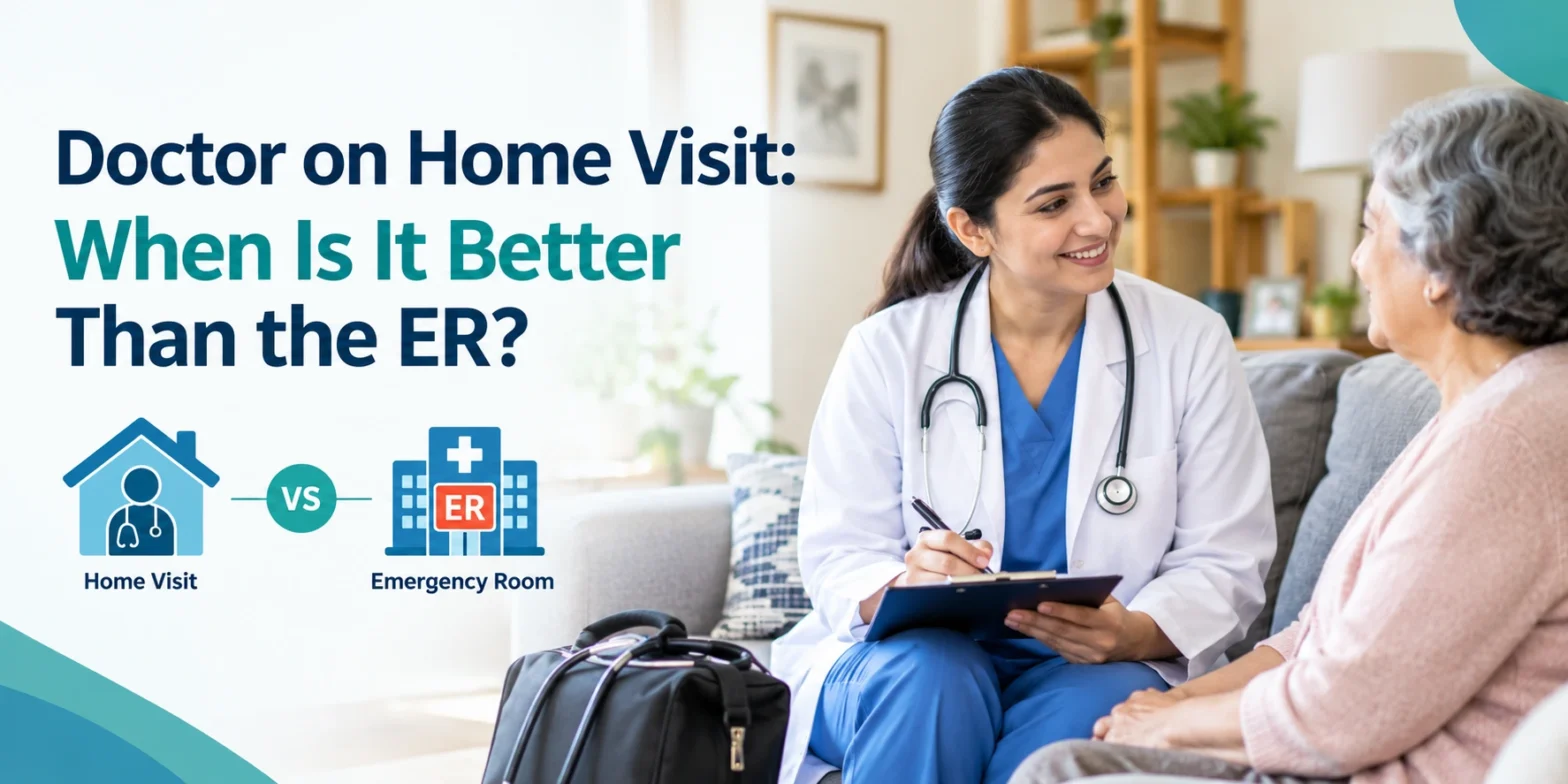
You know the moment. Your kid’s forehead is burning up, or your dad’s suddenly dizzy and unsteady, and you’re standing there at 2 a.m. trying to decide: is this an emergency room situation, or can it wait until morning? There’s actually a third option a lot of people don’t think of in the moment  calling a doctor on home visit who can come to you within a couple of hours and give you an actual answer instead of a guess. This has stopped being a niche service. As home healthcare has become more normal, more people are realizing this is often the calmer, more sensible choice for the huge middle ground of symptoms that are worrying but not life-threatening especially with kids and elderly parents, and especially outside normal clinic hours when your usual doctor isn’t reachable. Here’s how to actually think about it: when it makes sense, how the whole thing works, roughly what it costs, and maybe most importantly how to tell the difference between “call a home visit doctor” and “go to the hospital right now.” What This Service Actually Is A doctor-on-home-visit service sends a licensed physician to your home, usually same-day or within a few hours, to look at something that’s bothering you enough to need a professional but isn’t clearly an emergency. It’s a bit different from booking a regular physician home visit for an ongoing condition like diabetes management — this is more reactive. Something’s come up today, and you don’t want to wait in a clinic line to find out if it’s serious. People usually call for things like: A sudden high fever, in a kid or an adult Vomiting, diarrhea, or looking a bit dehydrated A suspected infection — throat, ear, urinary tract, a skin issue A cut, sprain, or minor injury A mild allergic reaction Getting sick right after travel Flu or something contagious, where you’d rather isolate than sit in a waiting room Just a general “something’s not right” feeling that doesn’t obviously scream ER The Question That Actually Matters: Home Visit or Hospital? This is the call that matters most, and it’s worth having a clear framework in your head before you’re panicking at midnight. Situation Home Visit Works Go to the ER Fever, no breathing trouble Fine Not usually necessary Vomiting/diarrhea, mild dehydration Fine Only if it’s severe Minor cuts, sprains, bruises Fine Only for deep wounds or suspected fractures Chest pain or pressure, trouble breathing No Go now Facial drooping, slurred speech, sudden weakness No Call emergency services immediately Throat or face swelling from an allergic reaction No Go now Bleeding that won’t stop No Go now Loss of consciousness No Call emergency services If you’re genuinely unsure and the situation feels like it’s getting worse, don’t try to save time by calling a home-visit doctor — go to the hospital or call emergency services. That’s not being overly cautious; it’s just the right call. What Actually Happens When You Call You book through an app, a website, or a phone call, and describe the symptoms as clearly as you can. Most services now do a quick triage step first  sometimes AI-assisted, sometimes a nurse on the phone  mainly to catch anything that actually needs the ER instead of a home visit. You get matched with a nearby physician and a rough arrival window. The doctor examines you at home — vitals, physical exam, questions about history and symptoms. You get a diagnosis and a treatment plan on the spot, including medication if it’s appropriate and they have it with them. A digital prescription gets sent to your phone, often with delivery options for the medicine. If it needs more than they can handle at home, they’ll refer you onward — a specialist, a hospital, or maybe just a blood test to confirm something. If you want, the visit notes get shared with your regular doctor, so nothing falls through the cracks. How Fast Can Someone Actually Get There? Honestly, it depends on a few things: Time of day — daytime calls move faster than 2 a.m. ones, unsurprisingly Where you are — dense cities tend to have better coverage than smaller towns or rural areas How busy things are — flu season or a local outbreak can stretch response times What tier of service you book — some platforms let you pay a bit more for priority dispatch Most decent urban services aim for somewhere between one and three hours for a standard call. That’s not instant, but it beats an ER waiting room most nights. Before the Doctor Shows Up, Have This Ready A rundown of symptoms and when they started Current medications and any allergies Relevant medical history — surgeries, chronic conditions, recent hospital visits A thermometer reading, if you’ve got one Somewhere reasonably quiet and well-lit for the exam Insurance details, if that’s relevant to you Any recent test results connected to the issue What It’ll Cost You The pricing usually breaks down into a few pieces: A base fee for the consultation itself A late-night or early-morning surcharge, if that’s when you’re calling Sometimes a travel charge, depending on distance and city Extra for any on-site testing — ECG, glucose check, oxygen levels Medication, usually billed separately unless it’s bundled in Good services will show you the price upfront before the doctor even leaves for your place. If a provider won’t give you a straight number before booking, that’s worth noticing. Why This Has Become So Common, So Fast A few things are pushing this trend at once. Traffic and city congestion make even a “quick” clinic trip eat up half a day when you’re sick. Healthcare costs are pushing people to be more deliberate about when they actually need an ER versus a targeted, cheaper alternative. Post-pandemic habits made remote and at-home care feel normal in a way it didn’t before. And frankly, the logistics of matching a doctor to a patient nearby, tracking arrival times  are just easier… Continue reading Doctor on Home Visit: When Is It Better Than the ER? 
Patient Care Taker Services in Delhi & Gurugram

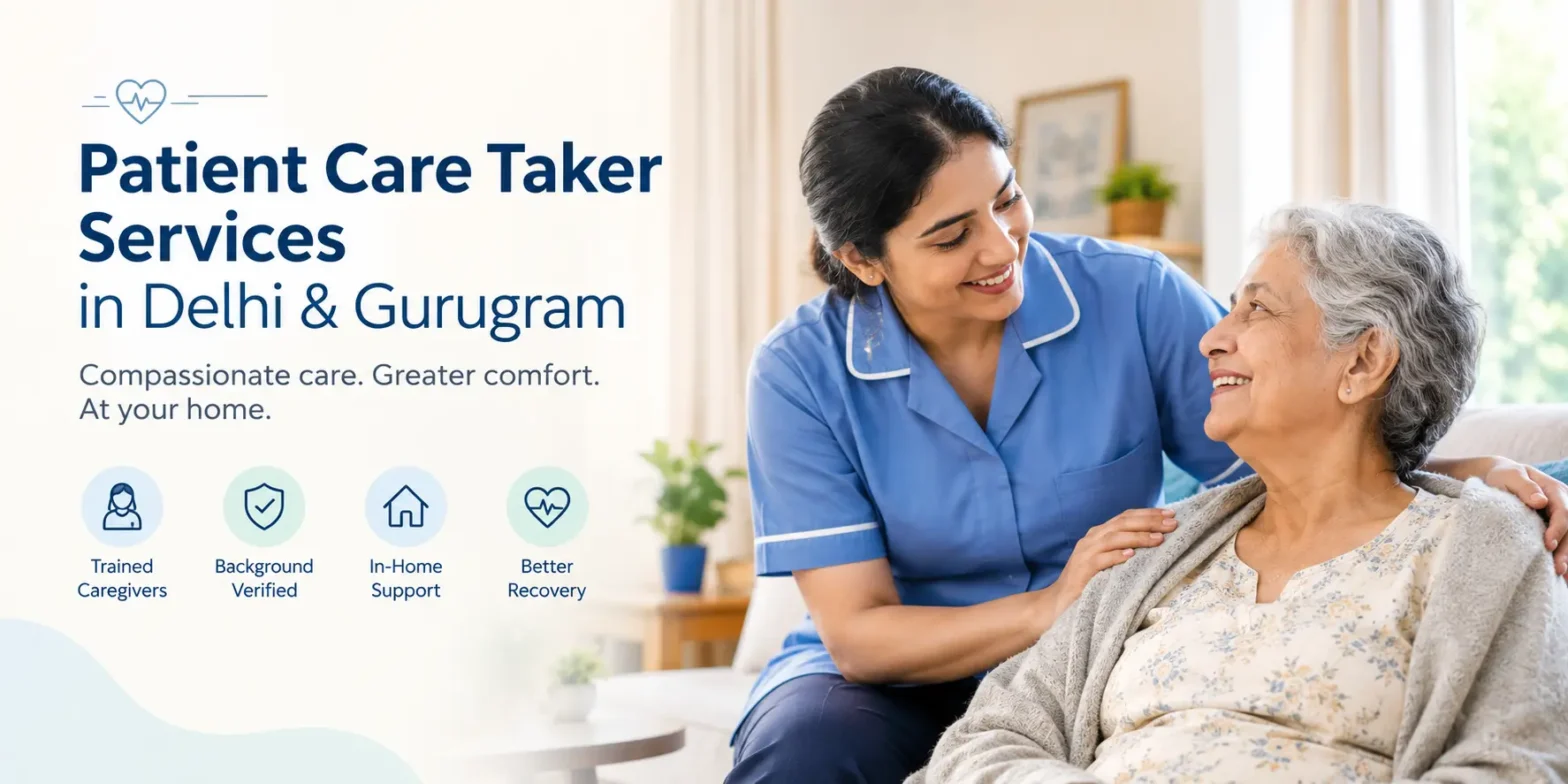
Why Finding the Right Patient Care Taker Matters More Than Ever When a parent is recovering from surgery, a grandparent is living with dementia, or a family member is bedridden after an accident, the question every household in Delhi and Gurugram eventually asks is the same: who is going to look after them at home? A trained patient care taker does far more than “keep an eye” on someone. They manage medication schedules, monitor vitals, prevent falls, assist with mobility, and act as the crucial link between the family and the treating doctor. With Delhi NCR’s population aging rapidly and more families adopting nuclear household structures, professional home-based patient care has moved from a luxury to a necessity. This guide walks you through everything a Delhi or Gurugram family needs to know in 2026 — costs, care types, how to vet an agency, the latest technology shaping home care, and how to book a patient care taker who is qualified, background-verified, and genuinely suited to your loved one’s needs.   What Is a Patient Care Taker, Exactly? A patient care taker (also called a caregiver, attendant, or home health aide) is a trained individual who provides non-hospital, in-home support to patients who are elderly, recovering from surgery, chronically ill, or living with limited mobility. Depending on the level of medical complexity, a patient care taker can range from: Basic attendant — daily living support, companionship, mobility assistance Trained nursing attendant — vitals monitoring, wound care, injections ICU-level/critical care attendant — ventilator support, complex medical monitoring Understanding which category your family needs is the first step toward getting the right kind of help — and avoiding paying for a service level you don’t actually require.   Why Demand for Patient Caretakers Is Rising in Delhi & Gurugram (2026 Trends) Several converging trends are driving the sharp rise in home-based patient care across the NCR region: An Aging, Urbanizing Population Delhi NCR has one of India’s fastest-growing elderly populations, and Gurugram’s rapid corporate migration means many working professionals live away from aging parents — creating direct demand for professional in-home support. Shorter Hospital Stays, Longer Home Recovery Hospitals increasingly discharge post-surgical and post-ICU patients earlier to free up beds, shifting the recovery burden — wound care, mobility training, vitals tracking — onto the home environment. Technology-Enabled Care Coordination 2026 has seen wider adoption of: App-based instant booking for caregivers and nurses Remote patient monitoring wearables (SpO2, ECG, fall-detection) Digital care plans shared in real time with family members and doctors AI-assisted symptom triage before a caregiver or doctor is dispatched Insurance & Government Support Expanding Slowly Schemes like Ayushman Bharat (PM-JAY) now extend coverage to senior citizens aged 70+, and more private insurers are beginning to offer OPD/domiciliary care riders — indirectly making structured home care more financially accessible.   Types of Patient Care Taker Services Available in Delhi & Gurugram   Care Type Best Suited For Typical Skill Level Approx. Monthly Cost (₹) Basic Attendant / Companion Care Elderly needing daily support, mobility help General training 12,000 – 28,000 Trained Nursing Attendant Wound care, injections, chronic disease monitoring Certified nursing skills 25,000 – 45,000 ICU / Critical Care Attendant Ventilator support, post-ICU discharge Specialized clinical training 48,000 – 1,20,000+ Dementia / Alzheimer’s Care Memory loss, wandering risk, behavioral support Specialized dementia training Varies by hours Respite Care (Short-Term) Temporary relief for family caregivers General/nursing Daily/weekly rate Post-Operative Care Surgery recovery, wound dressing Trained nurse preferred Package-based Note: Prices vary by locality within Delhi NCR and Gurugram, hours required (part-time vs. live-in), and whether medical equipment or lab coordination is bundled in. If your family needs a doctor to physically assess the patient alongside caregiver support — for example, to set the initial care plan or review recovery progress — you can explore doctor home visit services that work alongside your caretaker for coordinated care.   How Much Does a Patient Care Taker Cost in Delhi & Gurugram? Based on current 2026 market rates across NCR: Basic attendant/caregiver (full-time): ₹12,000–₹28,000/month, or roughly ₹650–₹1,200/day Trained nursing support: ₹25,000–₹45,000/month 24/7 live-in nursing care (overall average): ₹25,000–₹80,000/month depending on condition severity ICU-level critical care: ₹48,000–₹1,20,000+/month Cost-Saving Tip Booking care in monthly packages rather than daily rates is consistently more economical. Families needing care for multiple members (e.g., an elderly parent and a recovering spouse) also benefit from family care packages, which often bundle a set number of visits or hours at a discounted rate.   How to Choose a Reliable Patient Care Taker Agency: A Step-by-Step Checklist Step 1: Define the Level of Care Needed Is it companionship, nursing-level medical support, or critical/ICU-level care? Be specific about mobility status, existing conditions, and medication needs. Step 2: Shortlist 2–3 Registered Agencies Avoid hiring an unverified independent caretaker without agency backing — this removes accountability and safety checks. Step 3: Verify Background Checks & Training Ask directly about police verification, training certificates, and prior clinical experience — especially for nursing-level or dementia care roles. Step 4: Ask About Replacement Policy A dependable agency should be able to provide a backup caretaker if your assigned one is unavailable or unsuitable — continuity of care should never depend on a single individual. Step 5: Request a Trial Period Before committing to a long-term contract, ask for a short initial booking to evaluate compatibility and quality of care. Step 6: Confirm Pricing Transparency Get a written breakdown of charges — many families report discrepancies between “starting from” advertised rates and final billing, so clarify this upfront. Step 7: Finalize the Agreement Lock in terms on pricing, notice period, working hours, and included services (equipment, lab coordination, doctor visits) before the caretaker begins. You can start this process directly by exploring available home care services or going straight to schedule a home visit for an initial assessment.   Specialized Care Scenarios Dementia & Alzheimer’s Care Dementia care requires more than general caregiving experience. Look for agencies offering: Specific dementia/Alzheimer’s training Structured routines and home safety-proofing Experience managing wandering risk and… Continue reading Patient Care Taker Services in Delhi & Gurugram

Nursing Staff at Home: Everything You Need to Know Before Hiring in 2026

As India’s healthcare needs evolve, more families are choosing professional home nursing. Here’s how to make the right decision. When a loved one returns home after a hospital stay, recovery often requires more than rest. Medications, regular monitoring, mobility support and timely medical care become part of everyday life, making it challenging for families to manage everything on their own. This is why nursing staff at home has become an essential part of modern healthcare in India. Beyond elderly care, home nursing now supports patients recovering from surgery, managing chronic illnesses or requiring long-term medical attention. The need continues to grow. According to the United Nations Population Fund (UNFPA), India’s elderly population is projected to reach nearly 193 million by 2030, while conditions such as diabetes, hypertension and heart disease are becoming increasingly common. As a result, more families are turning to trusted home healthcare services for professional support. AmeriHealth Home Healthcare provides compassionate, personalised nursing care that helps patients recover safely and comfortably in the familiar surroundings of their own homes. Why Is Home Nursing Becoming More Important in 2026? Healthcare today looks very different from what it did even a decade ago. Hospitals are focusing on treating acute medical conditions, while recovery often continues at home. Advances in medical technology, better monitoring equipment and personalised care plans have made it possible for many patients to receive professional nursing support without remaining in a hospital for extended periods. But healthcare isn’t the only reason. Families are changing too. Many households now have working professionals who simply cannot provide round-the-clock medical care despite wanting to. Elderly parents are living longer, but often with multiple health conditions that require regular monitoring. As a result, professional nursing staff at home has become a practical solution that supports both patients and caregivers. What’s Driving the Demand for Home Nursing? Several healthcare trends are shaping this shift across India. 1. An Ageing Population India is experiencing one of the fastest-growing elderly populations in the world. As people age, the likelihood of requiring assistance with medication management, mobility, wound care and chronic disease monitoring naturally increases. Many seniors wish to remain in the comfort of their own homes instead of spending extended periods in hospitals or care facilities. Home nursing helps make that possible while preserving their dignity and independence. 2. Rise in Chronic Diseases According to the International Diabetes Federation, India has over 100 million adults living with diabetes, making it one of the countries with the highest diabetes burden globally. Alongside diabetes, hypertension, cardiovascular diseases and chronic respiratory illnesses continue to rise. These conditions often require ongoing medical supervision rather than repeated hospital admissions. Professional nursing care can assist with: Blood pressure monitoring Blood sugar management Medication administration Recovery assessments Patient education Early identification of warning signs 3. Earlier Hospital Discharge Modern healthcare increasingly encourages patients who are medically stable to continue recovery at home. This approach can reduce unnecessary hospital stays, lower the risk of hospital-acquired infections and improve patient comfort when supported by qualified healthcare professionals. For many families, this transition feels reassuring only when trained nurses continue the prescribed care plan at home. Who Can Benefit from Home Nursing Services? A common misconception is that home nursing is only for senior citizens. In reality, patients of different age groups may require professional nursing support depending on their medical condition. Home nursing is commonly recommended for: Patient Group Why Nursing Support Helps Elderly individuals Daily medical supervision and mobility assistance Post-surgical patients Monitoring recovery and preventing complications Stroke survivors Rehabilitation support and regular assessment Cancer patients Symptom management and supportive care Parkinson’s patients Medication support and mobility assistance Bedridden patients Pressure sore prevention and hygiene care Patients with chronic illnesses Continuous health monitoring Individuals requiring palliative care Comfort-focused medical and emotional support Every patient has unique healthcare needs, which is why professional assessment remains an essential first step before beginning any nursing care plan. What Does Professional Home Nursing Include? Many people assume a home nurse only administers injections or medicines. In reality, modern nursing care is far more comprehensive. Professional nursing staff at home can support patients through a wide range of clinical services, including: Medication administration Injection support IV infusion monitoring (when prescribed) Vital signs monitoring Blood sugar monitoring Catheter care Feeding tube management Tracheostomy care Wound dressing Pressure ulcer prevention Pain management Oxygen saturation monitoring Mobility assistance Post-operative observation Health documentation and reporting These services help ensure that recovery continues safely between doctor consultations while allowing family members to focus on emotional support instead of managing complex medical procedures. “Can We Manage Everything Ourselves?” This is perhaps the most common question families ask after bringing a loved one home. At first, it may seem manageable. One family member agrees to administer medicines. Another takes responsibility for meals. Someone else checks blood pressure. But as days turn into weeks, reality begins to set in. Sleep becomes irregular. Medical appointments increase. Work commitments continue. Family caregivers often find themselves physically and emotionally exhausted. This phenomenon, known as caregiver burnout, is becoming increasingly recognised worldwide. Providing continuous care without adequate support can affect not only the caregiver’s well-being but also the quality of care received by the patient. Professional nursing staff at home does not replace the family’s involvement, it complements it. Qualified nurses handle medical responsibilities while allowing loved ones to focus on companionship, encouragement and emotional support during recovery. Why Personalised Nursing Care Is Vital No two patients recover in exactly the same way. A person recovering from knee replacement surgery requires a very different care plan from someone living with advanced Parkinson’s disease or recovering after a stroke. That’s why personalised care has become one of the most important aspects of home healthcare. Rather than following a one-size-fits-all approach, experienced providers assess: Medical history Current diagnosis Prescribed treatment Mobility levels Nutritional requirements Pain levels Risk of complications Family support system This information helps create an individualised care plan focused on improving recovery while maintaining patient comfort and… Continue reading Nursing Staff at Home: Everything You Need to Know Before Hiring in 2026

Vaccination at Home: Everything You Need to Know Before Booking in 2026

More families are choosing home vaccination for convenience, safety and timely protection. Here’s what you should know before booking. Have you ever delayed a vaccine appointment because the clinic was too far, traffic was unpredictable or taking time off work felt impossible? You’re not alone. According to the World Health Organization (WHO), vaccines prevent 3.5 to 5 million deaths every year from diseases such as measles, tetanus, diphtheria and influenza. Yet many people miss or postpone vaccinations simply because reaching a healthcare facility isn’t always convenient. This growing need has made vaccination at home an increasingly popular healthcare service. Instead of travelling to a clinic, trained healthcare professionals administer recommended vaccines in the comfort of your home while following proper medical and safety protocols. AmeriHealth Home Healthcare makes preventive care easier by offering professional home vaccination services designed around your schedule, helping families stay protected without unnecessary travel. Why Are More Families Booking Home Vaccination Services? Have you ever postponed a vaccination because taking time off work wasn’t possible? Or wondered if it was worth spending hours travelling and waiting at a clinic for a routine vaccine? For many families, these situations are becoming increasingly common. Parents often juggle school schedules, work commitments and childcare, while older adults may find travelling long distances physically tiring. Even a simple vaccination appointment can turn into an all-day task. This is where vaccination at home makes a real difference. Instead of adjusting your entire day around a clinic visit, qualified healthcare professionals bring the service to your doorstep, making preventive healthcare more convenient, accessible and stress-free. What Is Driving the Demand for Vaccination at Home in 2026? The demand isn’t increasing by chance. India’s healthcare priorities are changing. According to the United Nations Population Fund (UNFPA), India’s population aged 60 years and above is expected to reach nearly 193 million by 2030. As people live longer, preventive healthcare becomes even more important. Healthcare experts are also placing greater emphasis on adult immunisation. Vaccines are no longer recommended only during childhood. Depending on age, occupation, travel plans or medical conditions, adults and senior citizens may also require specific vaccines after consulting their doctor. Preventing disease is often easier, safer and more affordable than treating it later. Who Can Benefit the Most from Home Vaccination? Many people assume home vaccination is only meant for children. In reality, it can benefit people at different stages of life. Individual Why Home Vaccination Helps Infants Comfortable environment and reduced travel Young children Less anxiety compared to crowded clinics Senior citizens Easier access for people with limited mobility Working professionals Flexible appointment scheduling Pregnant women Added convenience when medically advised Individuals with chronic illnesses Supports timely preventive healthcare Families Multiple vaccinations can be planned in one visit Every vaccination should always be recommended by a qualified healthcare professional after reviewing medical history. Which Vaccines Can Be Administered at Home? Professional home healthcare providers can administer a wide range of vaccines depending on age, medical history and clinical eligibility. These commonly include: BCG Hepatitis A Hepatitis B DTaP and DTwP Oral Polio Vaccine (OPV) MMR Pneumococcal vaccines Influenza vaccine Meningococcal vaccine Japanese Encephalitis vaccine Rabies vaccine where medically appropriate Cholera vaccine when indicated The final recommendation should always come from your doctor or healthcare provider. Are Busy Schedules Causing You to Miss Important Vaccinations? Life gets busy. School schedules. Office deadlines. Traffic. Family responsibilities. Before you know it, an important vaccination appointment has been postponed. For older adults, the challenge can be even greater. Travelling to a healthcare facility may require assistance, transportation and considerable effort. This is exactly where vaccination at home makes a meaningful difference. Instead of rearranging your day around a hospital visit, qualified healthcare professionals bring preventive care directly to your home, helping you stay on schedule with greater convenience. What Makes a Home Vaccination Service Safe? Safety starts long before the vaccine is administered. Vaccines need to be stored and transported within a recommended temperature range, known as the cold chain, to maintain their effectiveness. Professional providers also ensure: Proper vaccine storage and transport Health assessment before vaccination Administration by trained medical professionals Observation after vaccination Guidance on common side effects and aftercare These measures help ensure every vaccine is administered safely and according to accepted medical standards. Why Families Trust AmeriHealth Home Healthcare Choosing a vaccination provider is about much more than convenience. Families want confidence that every vaccine is handled correctly and administered by experienced professionals. AmeriHealth Home Healthcare offers personalised vaccination services supported by trained healthcare teams, flexible appointment scheduling, pre and post-vaccination guidance, and patient-centred care. Whether you’re booking for your child, an elderly parent or yourself, the focus remains on making preventive healthcare simple, safe and stress-free. Looking for a reliable vaccination service at your doorstep? Contact AmeriHealth Home Healthcare to schedule a convenient appointment and receive professional vaccination support from experienced healthcare professionals. How Can You Tell If a Home Vaccination Service Is Reliable? Choosing a home vaccination provider is about much more than convenience. You’re trusting someone with an important part of your family’s preventive healthcare, so it’s worth taking a closer look before booking. A reliable provider should: Use qualified healthcare professionals to administer vaccines. Maintain the recommended cold chain during storage and transport. Review your medical history before vaccination. Explain the benefits and possible side effects of the vaccine. Observe the patient for a short period after vaccination, when appropriate. Provide clear post-vaccination guidance and documentation. These practices help ensure that vaccines are administered safely and according to accepted medical standards. Why Are More Adults Talking About Vaccination Today? For many years, vaccination was mostly associated with childhood. That perception is changing. The World Health Organization now promotes a life-course approach to immunisation, recognising that protection is important at every stage of life. Depending on age, occupation, travel plans or underlying medical conditions, adults may also be advised to receive vaccines such as influenza, pneumococcal or hepatitis vaccines after consulting their doctor. This shift is… Continue reading Vaccination at Home: Everything You Need to Know Before Booking in 2026

Why Are Painkillers Risky for the Elderly

Painkillers Are Not Candies: Hidden Risks of Daily Painkiller Use in the Elderly Painkillers are among the most commonly used medicines worldwide. Many people take them for headaches, joint pain, backache, or fever—often without medical advice. However, daily or unsupervised use, especially in older adults, can silently damage the kidneys, stomach, and even the brain. What Are Painkillers? Painkillers, also called analgesics, are medicines used to reduce pain and inflammation. Common over-the-counter (OTC) painkillers include: Paracetamol (Acetaminophen) Ibuprofen Diclofenac Aspirin Naproxen These medicines are easily available, which is why many people assume they are completely safe. But regular or unsupervised use can lead to serious health complications. Why Are Painkillers Risky for the Elderly? Older adults often have multiple health conditions and take several medications at the same time. This increases the chances of drug interactions and side effects. Many seniors take painkillers regularly for: Arthritis Back pain Joint stiffness Muscle pain Headaches When taken without medical supervision, these drugs can cause silent organ damage. Hidden Dangers of Daily Painkiller Use 1.) Kidney Damage Regular use of certain painkillers can reduce blood flow to the kidneys. Over time, this may lead to: Chronic kidney disease Reduced kidney function Need for dialysis in severe cases 2.) Stomach Ulcers and Internal Bleeding Painkillers, especially NSAIDs (like ibuprofen and diclofenac), can: Irritate the stomach lining Cause ulcers Lead to internal bleeding This risk is much higher in elderly people. 3.) Drug Interactions Many seniors take medicines for: Blood pressure Diabetes Heart disease Thyroid disorders Combining painkillers with these drugs can create harmful interactions and increase complications. 4) Impact on Brain and Mental Health Long-term or excessive painkiller use may lead to: Confusion Drowsiness Memory problems Increased risk of falls These effects are especially dangerous for older adults. Common Questions People Search on Google Is it safe to take painkillers every day? No. Daily use without medical advice can damage the kidneys, stomach, and other organs over time. Which painkiller is safest for elderly people? Paracetamol is often considered safer in recommended doses, but even it should be taken only under medical guidance. Can painkillers cause kidney failure? Yes. Long-term use of certain painkillers can reduce kidney function and may lead to kidney failure. How often can I take painkillers? It depends on your health condition, age, and other medications. Always consult a doctor before regular use. Warning Signs of Painkiller Overuse Watch out for these symptoms: Reduced urine output Swelling in legs or face Stomach pain or burning Black or bloody stools Unusual tiredness or confusion If these occur, seek medical attention immediately. Safe Use of Painkillers: Essential Tips Watch out for these symptoms: Never take painkillers daily without doctor’s advice. Follow the prescribed dose strictly. Avoid mixing different painkillers. Get regular kidney and liver function tests if using long-term. Inform your doctor about all medications you are taking. Healthier Alternatives to Frequent Painkiller Use Physiotherapy Gentle exercise or yoga Hot or cold compress. Weight management Proper posture and ergonomics Final Message Pain management is important, but unsupervised use of painkillers—especially in senior citizens—can lead to serious complications. Always take these medicines under proper medical guidance because safety comes with awareness.

Best Home Health Care Services in Faridabad & Delhi-NCR – AmeriHealth Home Healthcare

Life in Delhi-NCR moves at lightning speed. Between work, family, and endless commitments, hospital visits often feel overwhelming—especially when a loved one requires continuous medical attention. That’s where home health care steps in. Imagine receiving the same level of medical expertise you expect in a hospital, but in the warmth and comfort of your own home. If you’ve been searching for reliable home health care in Faridabad and Delhi-NCR, look no further. AmeriHealth Home Healthcare has earned trust for its hospital-grade services, compassionate professionals, and patient-first care philosophy. Why More Families Are Choosing Home Health Care Healthcare at home isn’t just about convenience—it’s about quality of life. Families today want their loved ones to recover in a place that feels safe and familiar. Here’s why it’s a smarter choice: Comfort matters. Patients recover better when surrounded by their own family and environment. Care feels personal. Every patient has unique needs, and home healthcare ensures treatments aren’t “one-size-fits-all.” Reduced risks. Hospitals can sometimes expose patients to infections—at home, this risk drops significantly. Dedicated attention. Unlike crowded hospital wards, home care means focused, one-on-one support. Saves time and cost. No more frequent, tiring hospital visits. It’s efficient and often more affordable. AmeriHealth Home Healthcare – Bringing Hospital-Grade Care to Your Doorstep At AmeriHealth, healthcare is not just about treatment—it’s about compassion, dignity, and trust. Our team includes doctors, nurses, physiotherapists, caregivers, and diagnostic experts who work together to provide complete medical care without making you step out Whether it’s something routine like a blood test or something as complex as ICU-level critical care, we make it possible at home—across Faridabad and the wider Delhi-NCR region. Services We Provide at AmeriHealth Here’s a quick look at how we support families: Skilled Nursing Care:From post-surgery wound dressing to IV medication, catheter care, and chronic illness monitoring—our certified nurses handle it all with precision and empathy. Doctor Consultations at Home:No more waiting in clinics. Our doctors visit for health assessments, follow-ups, geriatric reviews, and preventive care advice. Physiotherapy at Home:Whether it’s recovering from surgery, managing a neurological condition like stroke, or healing from sports injuries—our physiotherapists create personalized recovery plans. Elderly Care Services:We know senior care goes beyond just medical support. Our caregivers assist with mobility, medications, and daily routines, while also offering companionship. Critical Care at Home:Need ICU-level support? We provide ventilator care, cardiac monitoring, tracheostomy care, and 24/7 nursing for patients who require close supervision. Mother & Baby Care:New mothers and newborns get special attention with postnatal monitoring, lactation support, and newborn hygiene assistance. Diagnostics at Home:From blood tests to ECG and X-rays—we bring certified labs and technicians right to your doorstep. Caregiver Support:For non-medical needs like grooming, bathing, feeding, and emotional support—our caregivers provide gentle assistance. ABG (Arterial Blood Gas) Test at Home:For patients with respiratory issues or critical conditions, we conduct ABG tests at home with fast and reliable results. Palliative Care:For patients battling serious illnesses, our team ensures comfort, dignity, pain relief, and emotional support for both patient and family. Why Families Trust AmeriHealth Every patient and family we serve teaches us something new—and that’s why we’re trusted across Faridabad and Delhi-NCR. Here’s what makes the difference: Expertise you can rely on – Our staff is not just certified, but deeply committed. Cutting-edge technology – From advanced monitoring devices to ICU setups at home. Round-the-clock availability – Care doesn’t wait, and neither do we. Affordable packages – Transparent pricing for both short-term and long-term care. A heart-first approach – Because true healing needs compassion alongside treatment. Real Stories, Real Impact After my knee surgery, AmeriHealth’s nursing and physiotherapy team made recovery feel effortless. Being at home helped me heal faster than I imagined.” – Amit S., Faridabad “The palliative care team gave my mother’s last months the dignity and comfort she deserved. Their support will always stay with us.” – Meena K., Delhi-NCR Bringing Healthcare Home, One Family at a Time Healthcare doesn’t always mean hospital stays. With AmeriHealth Home Healthcare, you get the reassurance of expert medical care without leaving home. From post-surgery support and elderly care to diagnostics and critical care—we’re here to make recovery easier and life healthier. 📞 Book AmeriHealth Home Healthcare today and let us bring care to where it matters most—your home. +919650099043